
Arborvitae Trees
Fast privacy, clean lines, and evergreen color that holds through winter.
Arborvitae are the “set it and smile” evergreens for homeowners who want real privacy without building a fence. When you plant the right form for your space—tall, broad screeners for big coverage or narrow columns for tight side yards—you get a living wall that stays green year-round, softens wind, and instantly makes a landscape feel finished. The best part is how predictable they are: most thrive with plenty of sun, well-draining soil, and deep watering while they establish. After that first season, they settle into a routine that feels refreshingly simple for a privacy tree.
If you’re planting a hedge, spacing is your secret weapon: closer spacing fills in faster, while slightly wider spacing improves airflow and long-term vigor—so you can match the plan to your timeline. And while arborvitae are famously low-maintenance, they’re not “no maintenance”: winter drying can bronze foliage, deer may browse in tough winters, and bagworms can surprise neglected plantings. That’s why this collection focuses on proven performers and clear guidance—so you can choose confidently, plant correctly, and keep that hedge thick for years under the We Grow Together Promise.
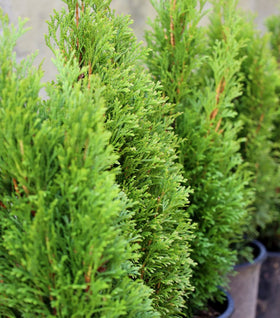

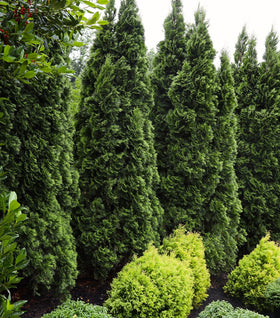
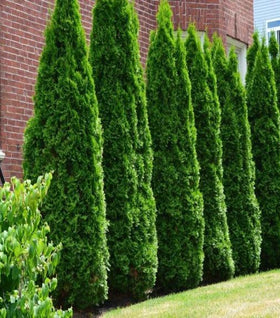

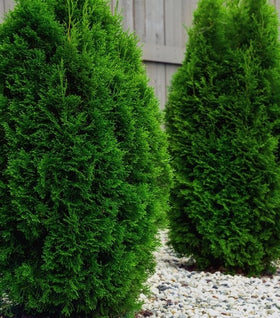
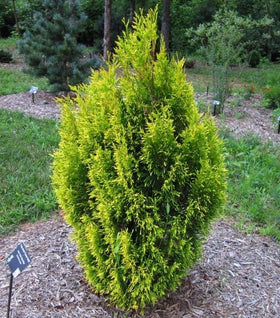
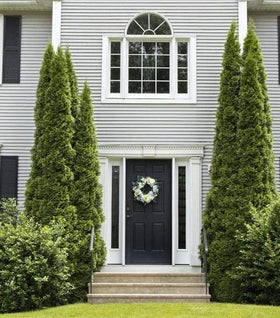
Create instant privacy with a living wall.
Arborvitae are evergreen architecture—dense, tidy, and naturally vertical—so they solve privacy quickly while still looking like a landscape feature (not a barrier). For property lines, pool areas, patios, and road noise buffering, a row of arborvitae reads clean and intentional year-round. Taller cultivars make the fastest “green fence,” while narrower selections tuck neatly beside driveways, along foundations, and in side yards where every foot matters.
One reason arborvitae convert so well in real landscapes is their versatility: you can plant a single specimen as an evergreen exclamation point, repeat them rhythmically to frame a view, or build a full-screen screen that turns an exposed yard into an outdoor room. They also play nicely with mixed beds—evergreen foliage makes perennials and flowering shrubs pop, especially in winter when the rest of the garden is resting.
Set expectations like a pro: these trees are mainly about foliage, not flowers. Their “bloom” is subtle—wind-dispersed pollen in spring, followed by small cones that mature later in the season. That means the visual payoff is dependable greenery and shape, not a short bloom window that comes and goes.
Get the look you want, from tight columns to giant screens.
Arborvitae come in distinct silhouettes, and choosing the right one makes a hedge look polished rather than crowded. Large pyramidal types are built for height and coverage, forming broad, feathery walls as they mature. Narrow forms stay slimmer and more formal, giving you vertical presence without stealing walkway space—perfect for tighter lots or a more tailored, symmetrical style.
Growth rate varies by cultivar and conditions, but it’s a major reason people love this group. Fast screeners can put on impressive annual growth once established, while narrower, more compact forms trade a bit of speed for a refined footprint and easier maintenance. Mature size also ranges widely—from compact cultivars that stay small enough for foundation-scale planting to towering privacy trees that become the backbone of the landscape.
Seasonal interest is mostly about winter performance: many arborvitae hold rich color through cold weather, while some bronze lightly before flushing back in spring. That bronzing is typically a normal cold response (not automatically a problem), but placement matters—wind and winter sun can dry foliage, especially on exposed sites. The goal is a cultivar-and-site match that keeps color strong when you need it most.
Place them right, and your hedge fills in faster.
For best results, think “sun + airflow.” Full sun drives denser growth, faster fill-in, and stronger winter color, while heavy shade can lead to thin, open plants that never quite become the privacy wall you wanted. If you only have partial shade, choose the brightest location available and prioritize good drainage—wet feet are a common cause of decline in evergreen screens.
Spacing is where your plan becomes real. For a seamless screen, large pyramidal types are commonly planted about 8–12 ft on center; narrow forms often land around 3–5 ft on center; and ultra-narrow columns can be set 2.5–4 ft on center when you want a tight, upright hedge. If you’re using a single-cultivar line, stay consistent; if you’re mixing heights for depth, stagger larger plants behind narrower ones for a layered look that still reads clean.
Functional placement tips: Use taller cultivars as the back line for privacy and wind filtering, then place slimmer columns closer to living spaces where you need clearance. In snow or ice zones, avoid forcing narrow columns into high-drift corridors; instead, give them a bit of breathing room so you can tie tops when storms threaten. And if deer pressure is common in your area, plan protection early—fencing is the most reliable approach when browsing is persistent.
Keep care simple, and your screen stays thick.
Planting success starts with two steps: dig wide (not deep) and water deeply. A hole about twice the root ball width helps roots expand, while setting the top of the root ball slightly above grade helps prevent settling and soggy crowns. After planting, keep soil evenly moist during the first growing season with deep soakings—especially during heat and wind—because dry stress in year one shows up later as thin growth and winter bronzing.
Pruning is usually minimal, but timing matters. Light shaping is best done around the spring flush (late spring into early summer for many regions), focusing on small trims that preserve green growth—avoid cutting hard into old, leafless wood that won’t regrow. If winter burn occurs, wait until mid-spring to remove dead tissue so you can see what truly recovers once new growth pushes.