
Fringe Trees for Sale
Add fragrant spring bloom and polished small-tree beauty.
Fringe trees are among the rare flowering trees that feel both graceful and useful in the landscape. They bring a soft, cloud-like bloom in late spring, a refined small-tree habit, and a calm elegance that fits beautifully into front yards, foundation plantings, courtyards, and mixed borders. If you want a flowering tree that looks special without feeling flashy, this collection is a smart place to start. Fringe trees offer the kind of bloom that catches attention from the street, but up close, the texture is even better, with delicate, fringe-like white flowers that add movement and a lightly fragrant presence to the garden. For homeowners, they make a landscape feel more finished and distinctive. For landscapers and avid gardeners, they offer an ornamental tree that layers easily into both classic and naturalistic designs.
What makes fringe trees even more appealing is how manageable they are once placed well. They are not plants that demand constant trimming or high-input care. Instead, they reward good siting, decent drainage, and a little patience with beautiful seasonal performance and handsome structure. Both native and Chinese fringe tree types can serve as standout specimens or soft anchors in smaller spaces where a large canopy tree would be too much. They work especially well when you want spring bloom, strong foliage presence through the growing season, and a small flowering tree that feels timeless rather than trendy. This collection is built for gardeners who want long-term landscape value, dependable beauty, and the confidence that comes with the We Grow Together Promise.
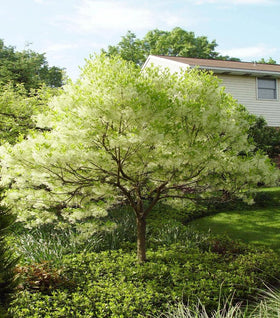

Pick fringe trees for a more elegant flowering landscape.
Fringe trees bring a softer, more refined look than many showier spring bloomers, and that is exactly why they are so valuable. Their flowers appear in airy clusters that read almost like white lace across the canopy, creating a graceful effect that feels polished without becoming overpowering. That makes this collection especially appealing for gardeners who want a flowering tree that elevates the space rather than dominating it. In residential landscapes, fringe trees fit naturally into entry gardens, front lawns, foundation islands, and side-yard beds where a compact ornamental tree can create presence without overwhelming nearby shrubs or architecture.
This collection also offers useful flexibility because fringe trees can support more than one design style. They work in traditional planting plans with clipped evergreens and layered shrubs, but they are equally at home in looser landscapes that emphasize native character, pollinator activity, and seasonal transitions. Native fringe tree types are especially appealing when gardeners want to bring more regional character into the landscape, while Chinese fringe trees offer a similarly elegant look with a tidy, easy-to-place form. In both cases, you get a small flowering tree that can function as a focal point, an accent, or a bridge between taller trees and lower foundation plantings.
For homeowners and designers alike, that versatility matters. A good small flowering tree needs to do more than bloom for a week or two. It should help shape the landscape, hold its form well, and contribute something worthwhile beyond the spring show. Fringe trees do exactly that. Their bloom may be the first to catch attention, but their shape, foliage, and low-maintenance nature are what make them a lasting asset in the garden.
Enjoy the airy blooms, refined form, and season-long appeal.
The biggest reason gardeners fall for fringe trees is the bloom. In late spring to early summer, branches are covered with clusters of white flowers, each with narrow, ribbon-like petals that create a soft, feathery effect across the canopy. The look is delicate, but the overall display is surprisingly noticeable, especially when the tree is planted where sunlight can catch the flowers from different angles. Many gardeners also appreciate the light fragrance, which adds another sensory layer near entryways, patios, and walkways. After bloom, the clean green foliage carries the tree through the rest of the growing season with a tidy, composed look.
Mature size is another strength of this category. Fringe trees generally stay in the small-tree range, with many selections maturing around 10 to 20 feet tall and wide, though native forms can sometimes become somewhat larger over time in ideal settings. Growth is usually slow to moderate, which makes them easier to place in smaller landscapes and simpler to manage around homes, patios, and mixed ornamental beds. They are substantial enough to serve as a specimen, but not so large that they quickly outgrow their space. That scale makes them especially useful where gardeners want a flowering impact without committing to a much bigger canopy tree.
Seasonal interest extends beyond bloom as well. Native fringe trees can produce dark blue to black fruit on female plants after flowering when a pollinator is nearby, adding wildlife interest. Chinese fringe trees may also carry showy fruit and often develop an attractive bark character with age. Foliage remains handsome through the growing season, and some plants may show soft yellow fall color. Altogether, fringe trees offer a complete ornamental package that feels calm, classic, and highly usable in a well-designed landscape.
Plant them where light and spacing show them off best.
Fringe trees perform best where they have enough sun to flower well and enough room to develop their natural shape. Full sun to part shade is the sweet spot for most landscape situations, with the heaviest flowering typically coming in sunnier exposures. They are excellent candidates for front-yard specimen planting, lawn islands, mixed shrub borders, woodland edges, and near patios where the spring display can be appreciated up close. Because they remain relatively compact, they are also useful in smaller residential spaces where a larger ornamental tree would create crowding or too much shade.
Spacing should reflect the mature width of the plant rather than the tree's size at planting time. In most home landscapes, allowing roughly 10 to 20 feet of width over time gives fringe trees the room they need to keep a balanced, natural habit and good airflow through the canopy. When used near buildings or in layered beds, leave enough clearance so the branching can be enjoyed rather than clipped back prematurely. These are trees that look best when allowed to grow into their character, not forced into tight spaces that require constant correction.
Functionally, fringe trees are excellent for softening corners, framing entries, and adding bloom to areas that need a refined focal point. They also work well in pollinator-friendly landscapes and native garden designs, especially the American fringe tree. While they are not screening trees or heavy shade trees, they are ideal when the goal is ornamental beauty, manageable size, and a flowering tree that brings elegance without demanding too much square footage.
Grow them with simple care and long-term confidence.
Fringe trees are relatively easy to care for when planted in the right place. They prefer well-drained soil and appreciate regular moisture while establishing, but once settled in, they are generally adaptable and not overly fussy. The native species is often found in moist woodland-edge conditions in nature, yet it can still perform well in average garden soils with good drainage. Chinese fringe trees are also considered easy to grow and low-maintenance in many residential settings. As with most ornamental trees, the best start comes from careful site choice, thoughtful planting, and steady watering during the first growing seasons.
Pruning needs are usually minimal, which is part of this collection’s appeal. Fringe trees naturally develop an attractive framework, so heavy annual pruning is rarely necessary. If shaping is needed, it is usually best done while the plant is young to encourage the preferred multi-stem or single-trunk form. Any routine pruning is best kept light and timed after flowering so the spring display is not sacrificed. In general, these trees look and perform best when allowed to maintain their natural habit rather than being heavily sheared or cut back.
There are a few cautions worth knowing. Fringe trees are not considered invasive, and they are not commonly flagged for toxicity concerns in routine landscape use, but they do dislike being moved once large, so it is smart to choose a permanent site carefully. Poor drainage can lead to stress and root problems, and some disease or pest issues may occasionally appear depending on local conditions. Native fringe tree has also been documented as a secondary host for emerald ash borer, so gardeners in affected areas should stay alert. With the right placement and a light hand on maintenance, fringe trees are dependable, graceful additions that bring standout spring beauty year after year.